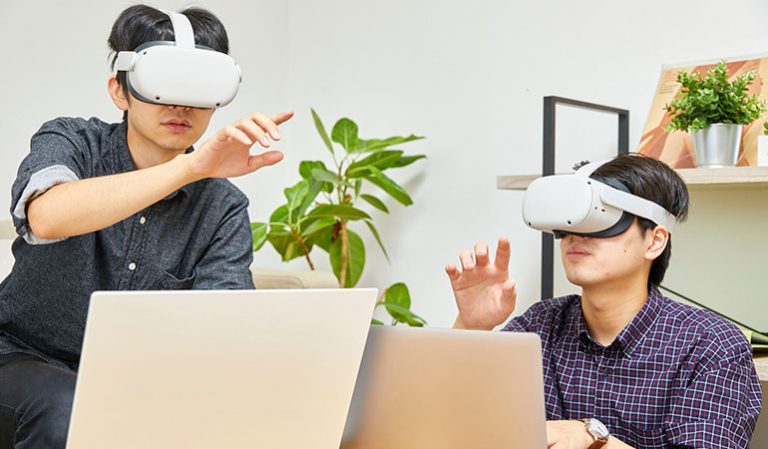
Healthcare - Extended Reality Step Inside the Human Body - No Scalpel Needed goal Challenge Faced Traditional anatomy learning is limited to cadavers or static 2D images, making it hard for students to grasp spatial understanding of human organs. solution Our Solution We built an AI-powered XR anatomy lab allowing students to interact with full-scale, animated 3D human systems. Tools we used Approach Step-by-Step Workflow Step 1 Model 3D organs with hyper realistic textures Step 2 Add AI layer to allow quiz/interactions Step 3 Enable multi-user sessions and tracking Step 4 Deploy on XR classroom setups Quantifiable Benefits Improved student retention rate 0 % Reduced dependency on physical cadavers 0 % Enabled 24/7 practice through virtual access /7 Enhanced spatial understanding 0 % Who’s Using This Medical universities and nursing colleges EdTech firms building immersive learning Virtual labs for remote learners Why It Matters Visual learning in XR enables faster understanding, better memory recall, and affordable accessibility at scale. case studies Real Results. Real Impact. See how these use cases helped industry leaders transform operations with AI & XR. Learn More